"Little" Tut – He Was No Legend
By Vivienne Gunning

The little boy placed on a cracked throne.
I started digging into his story because this “little” boy-king takes up an enormous amount of space in the Grand Egyptian Museum – two vast halls, about 7,000 square metres, filled with all 5,398 objects from his tomb.Who was he, really? Who – and what – was this boy who now occupies so much glass and gold and conversation? I discovered a sad story…
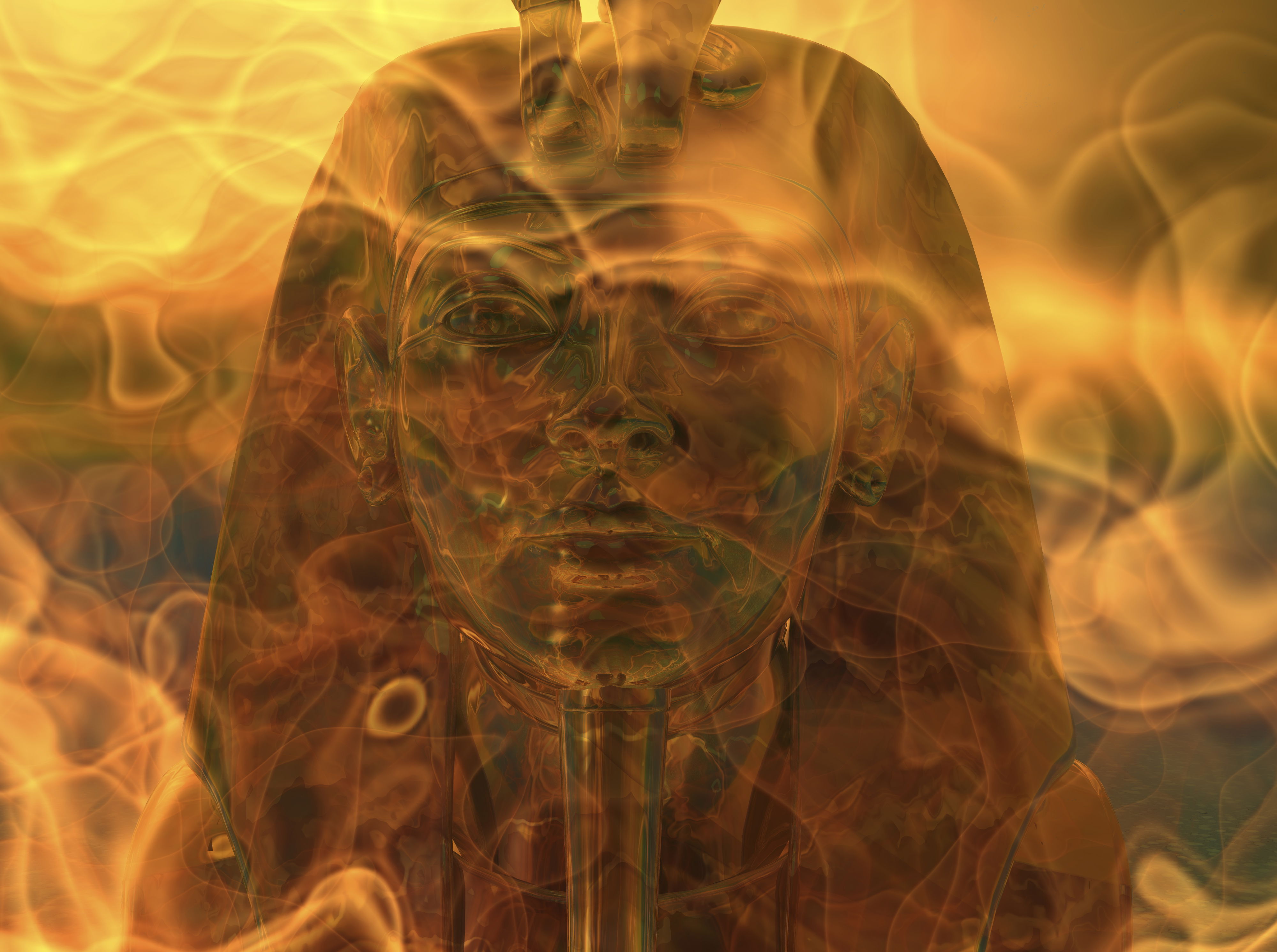
My story with Tut does not start with Tut at all.
It starts a little earlier, around 1353 BCE, with a restless prince called Amenhotep IV – son of Amenhotep III (Tut’s grandfather) and Queen Tiye. He steps onto the throne and decides, more or less: “Right, we’re changing everything.”New name – Akhenaten.New capital – out in the desert at Amarna. New religion – forget the old gods, we will worship one shining sun disk, the Aten. It is brutal.
At his side is Nefertiti. Not just pretty-bust-in-a-museum Nefertiti, but a real power in her own right, a strong woman. Tall crown, long neck, standing next to him in those strange Aten reliefs.
But there is another woman in the story, and she is easy to miss. Akhenaten also has a second wife – a royal princess of the same blood, his own sister, a daughter of Amenhotep III and Tiye. We only know her today as the “Younger Lady”. No grand statues. No famous tomb. Just a damaged mummy and a clinical nickname on a museum card.
Those two – Akhenaten and his sister-wife – have a little boy and…that is where my story starts.
That little boy is Tutankhaten, the future Tutankhamun. Or shall we call him, for easy reference: Tut.

Imagine him as a child running around in that strange sun-disk world. Nefertiti is not his mother, but she is right there – aunt, stepmother, powerful queen sweeping through the same corridors. He would have known her presence: the tall blue crown, the perfumes, the way everyone watches when she enters the room.
And Tut’s real mother – that anonymous princess, his father’s sister? She has not gone too. No statue taking credit for “my royal son”. No big tomb scenes. Nothing. She probably dies before Tut ever wears the crown, maybe even before Akhenaten himself. We do not know her name. We do not know what she looked like when she laughed. By the time Tut is pharaoh, his mother is almost certainly already on the “other” side. He never really gets to have a small boy’s life.
Akhenaten’s religious revolution burns for about seventeen years. Towards the end, a lot of scholars think Nefertiti is pushed even higher, sharing power as co-ruler. And then – silence. Akhenaten is gone, dead. What follows is a blur.
A Smenkhkare here, a mysterious royal name there. On damaged cartouches we see another name: Ankhkheperure Neferneferuaten. A female pharaoh. Many Egyptologists – including Dr Chris Naunton – are fairly convinced this is Nefertiti wearing the double crown for a year or two, trying to hold a cracked kingdom together after her husband’s experiment has blown up. But Akhenaten’s revolution has crashed. That story ends and another starts.
After those short, messy reigns that flicker between Akhenaten and Tut, thé boy is already marked out. There is no strong adult male heir left standing. Egypt is bruised and confused. The country does not need another visionary – it needs a bandage with a royal name on it. So the little prince is pushed forward — Tutankhaten, who is now about eight or nine years old. The adults (Ay, Horemheb, the priests) decide: “This is our boy.”They organise the coronation, the rituals, the proclamations. They present him to Egypt as pharaoh – but he is the face, not the hand on the steering wheel.
By the time Tut is presented to Egypt as pharaoh – the boy who “restores” the gods, moves the capital back, signs decrees with his own cartouche – Nefertiti has vanished from the stage. She is not at his side as Queen Mother. She is not carved next to him. Her name simply fades into the cracks.Tut, about eight or nine years old, is lifted onto a very fragile throne and crowned Tutankhaten. A child pharaoh – but still not ruling anything. Behind him, the grown men tighten the strings. Egypt is bruised, confused, and most of the powerful royals are dead, sidelined, or tainted by Akhenaten’s experiment. What the court needs is a calm, legitimate face: a boy with the right bloodline who can sit on the throne for the ceremonies, say the words, wear the crowns… and be controlled. Tutankhaten is perfect for that job – young enough to mould, royal enough to matter. The same men who place the crown on his head are quietly undoing what his father tried to do. Akhenaten’s religious revolution has broken everything. Now, with a limping boy on the throne, they can reverse it all in his name. There is no strong adult king to push back. There is only Tutankhaten – a young prince of the royal line, sitting very straight while others steady the chair from behind.
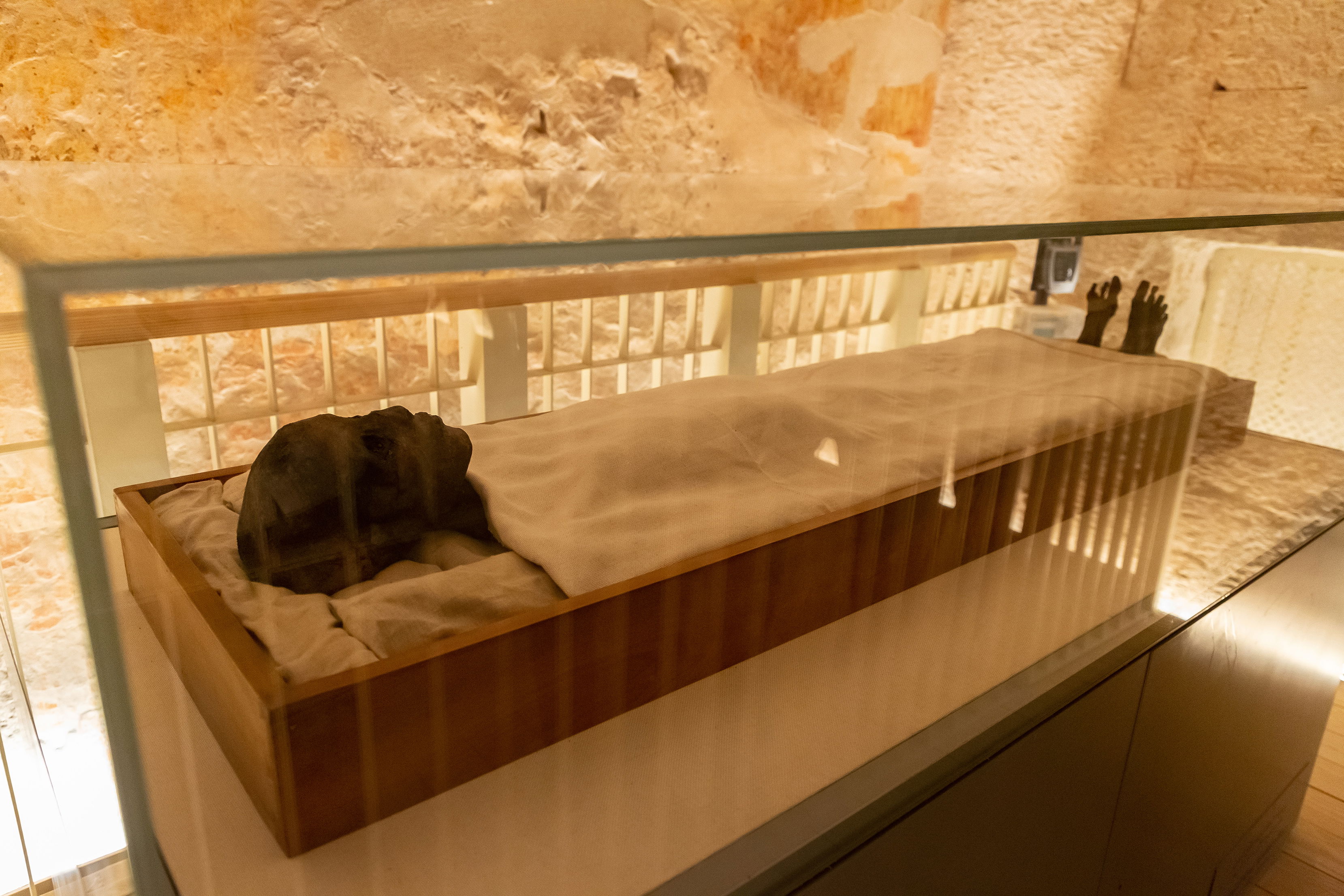
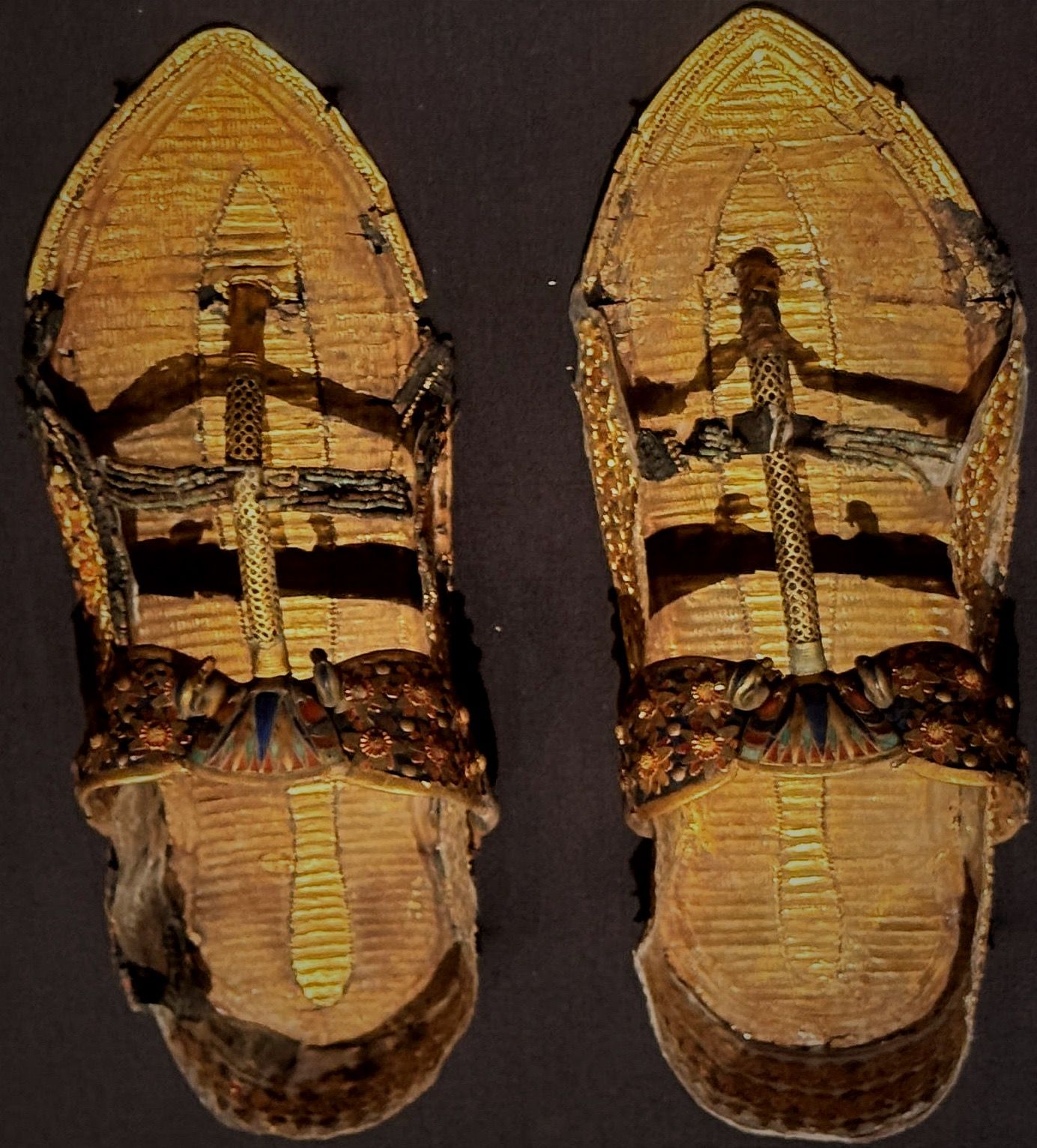
And the golden boy himself? He is not golden at all. Modern DNA and scans tell a harsher story. Tut is almost certainly the child of a full brother–sister marriage. His skeleton shows the price: a damaged left foot, bone disease in the feet, slight skewness in his body, probably constant pain. In his tomb, archaeologists did not just find crowns and chariots – they found over a hundred walking sticks. Not smooth, untouched props. Used. Worn where fingers once gripped them. So when you look at those perfect statues – the straight back, the bow, the proud pose – remember there was probably a real young man behind that image, leaning heavily on a cane, limping through cold stone corridors.He dies at about eighteen or nineteen. No one can swear exactly how. The dramatic murder-by-head-blow and glamorous chariot-crash theories have mostly gone quiet. The more likely version is softer and sadder: a genetically fragile teenager, maybe with malaria, maybe with a serious leg injury, loses the fight against infection. No antibiotics. No modern medicine. Just a failing body and a very short life.
Please read this incredible article: https://www.nbcnews.com/slideshow/king-tut-revealed-37622036.
I am not allowed to use the photos but it will give you an insight like no other. All photos used in this blog are my own or credited to Site123.
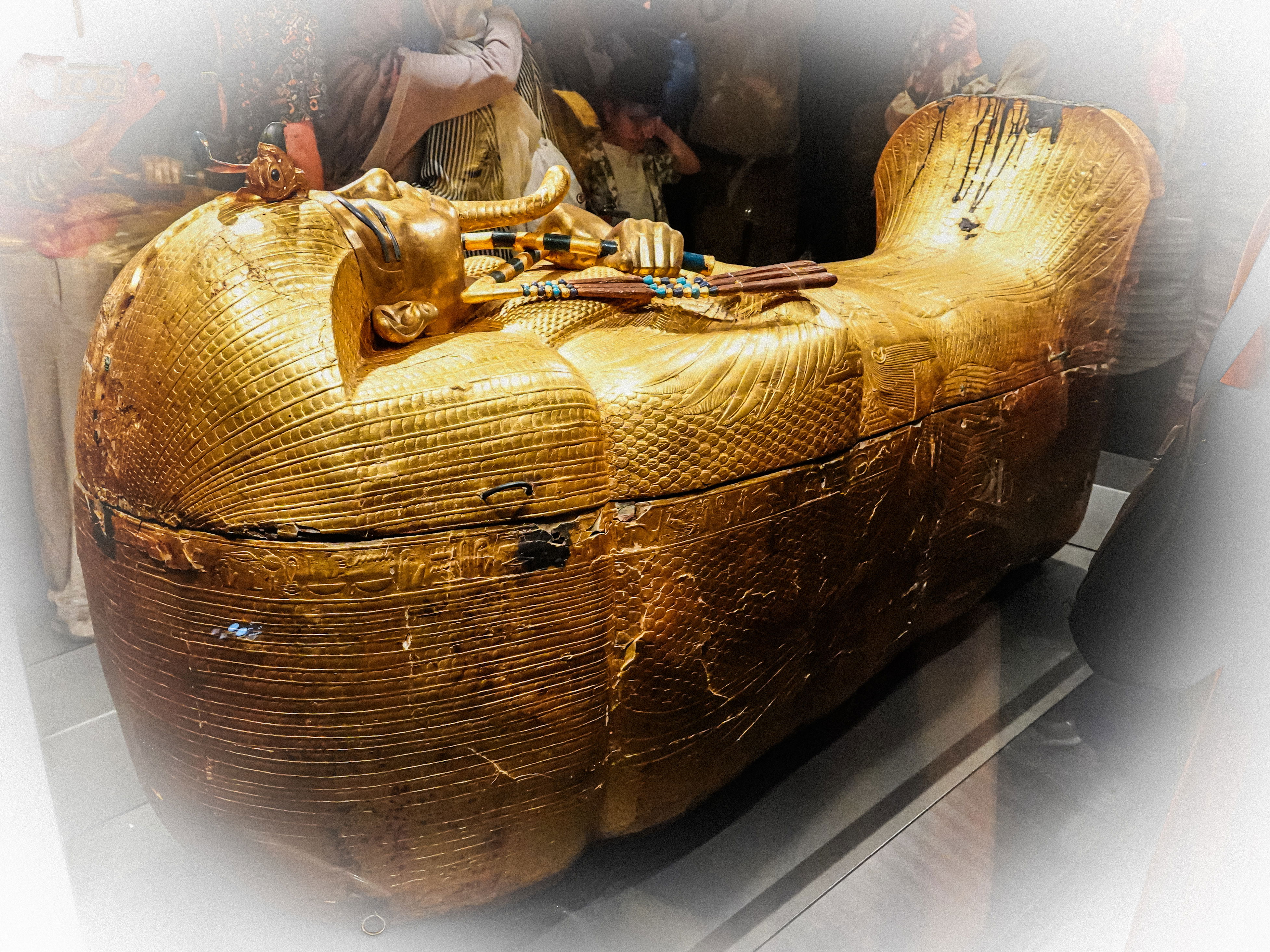
Disclaimer: I am not an Egyptologist or academic – just a traveller with a camera and a curious mind, one of the many people swept through the Grand Egyptian Museum trying to make sense of what we see. A visit to GEM is fast and crowded; there is not much time or space to read every label or unpack every theory. This is not a formal study, just my own way of stitching together what I have read, watched and felt about this boy-king. The legend we know is polished in gold and glass. The boy himself was probably tired, sore, limping, and trying – in his own small way – to be what everyone else needed him to be.A little boy placed on a cracked throne.