The Pyramids of Giza — No aliens required. Just human ingenuity at its finest
After six weeks immersed in Egypt, I returned home with a deep sense of wonder, renewed curiosity, and the quiet certainty that this land always holds more than it reveals. Egypt does not offer itself all at once. It asks you to return. To look again. To listen more closely.This time, I had the space to go deeper. Not the postcard version of Egypt, but the story that makes you stop in your tracks and ask the same question humans have asked for centuries: How on earth did they build this… and why?
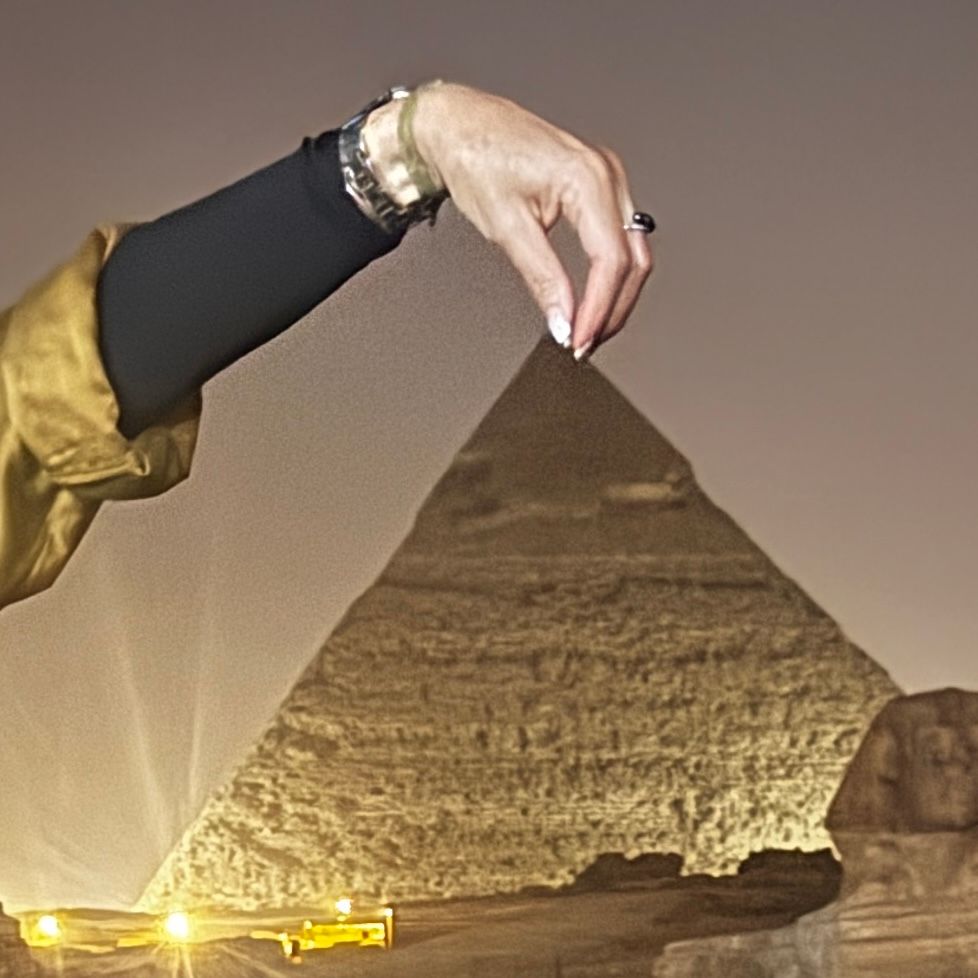
There will always be contradictions, debates, and unanswered questions surrounding the pyramids. That is part of their power. But standing before the Great Pyramid of Giza, one thought kept circling back to me: did the ancient Egyptians possess mathematical and architectural knowledge far beyond what we give them credit for? Because the story of the Great Pyramid is not really about stone.It is about belief. Vision. And a civilisation that decided to build forever.
The Pharaohs — Gods Who Walked Among Men
In Egypt’s Old Kingdom, rulers were not merely kings. They were living gods — the vital link between earth and sky, order and chaos, life and the afterlife. The pharaoh was believed to embody Horus on earth, and upon death, to ascend and unite with the gods.
Around 2600 BC, during the reign of Khufu (also known as Cheops), construction began on what would become the most enduring monument ever built by human hands.
His tomb was not simply a resting place. It was a carefully calculated passage to eternity — a stairway for a god-king’s soul to rise into the heavens.
Meanwhile, Elsewhere in the World…
While Egypt’s builders carved precision from limestone under the desert sun, the rest of the world was stirring with its own quiet brilliance — unaware of one another’s existence.There was no global communication. No shared knowledge across oceans. Just isolated sparks of genius lighting up different corners of the world. In Mesopotamia, the Sumerians were shaping the first true cities, pressing reeds into clay to invent writing, and building stepped ziggurats that reached skyward. Along the Indus River, engineers laid out cities like Mohenjo-Daro with astonishing urban planning — drainage systems, public baths, and perfectly gridded streets, thousands of years ahead of their time. On Crete, early Minoans painted dolphins on palace walls and designed open atriums that welcomed light and air. In Britain, massive stones were hauled across the land to form Stonehenge, aligned with the movements of the sun and stars. Across the ocean in Peru, the Norte Chico civilisation raised pyramids of stone and reed, while in China, bronze tools and ritual vessels reshaped daily life. Different worlds. No contact.Yet everywhere, humans were building, believing, and dreaming — each culture striving, in its own way, to leave something behind that would outlast them.
Built Without Steel, Wheels, or Cranes — And Not by Slaves (or aliens)
No steel. No cranes. No pulleys. Just copper tools, ropes, physics, social organisation — and an extraordinary, shared purpose.The Great Pyramid is believed to have been completed in roughly twenty years. The idea that this was slave labour lingers, fuelled largely by biblical interpretations and Hollywood portrayals. But archaeological evidence tells a very different story.
This was not slavery—It was religious duty, communal participation, and honour.Excavations near Giza uncovered a workers’ village that changed everything. Not a prison camp, but a thriving settlement with houses, bakeries, breweries, medical care, and cemeteries where workers were buried with respect. These were artisans, engineers, seasonal farmers, and labourers — many of whom worked during the Nile’s annual flood, when fields lay submerged and labour was available. Feeding and housing an estimated 20,000 to 30,000 people required immense organisation — grain, meat, fish, and beer, the beverage of the time, brewed on site. This was not just a construction project. It was a self-contained microeconomy, powered by faith, planning, and cooperation. Unimaginable. And yet — it happened.
The Scale of the Impossible. The Great Pyramid once stood about 480 feet high — the equivalent of a 50-storey building. Its base forms an almost perfect square, each side roughly 755 feet long. More than 2.3 million limestone blocks were placed with such precision that even today, a knife blade cannot slip between them.No mortar. No modern machinery. Just mastery. Most limestone blocks were quarried directly from the Giza plateau. The smooth white casing stones came from Tura, eight miles away, while the granite used deep inside the pyramid was transported from Aswan — nearly 900 kilometres to the south. It is estimated that workers positioned around 300 blocks per day!
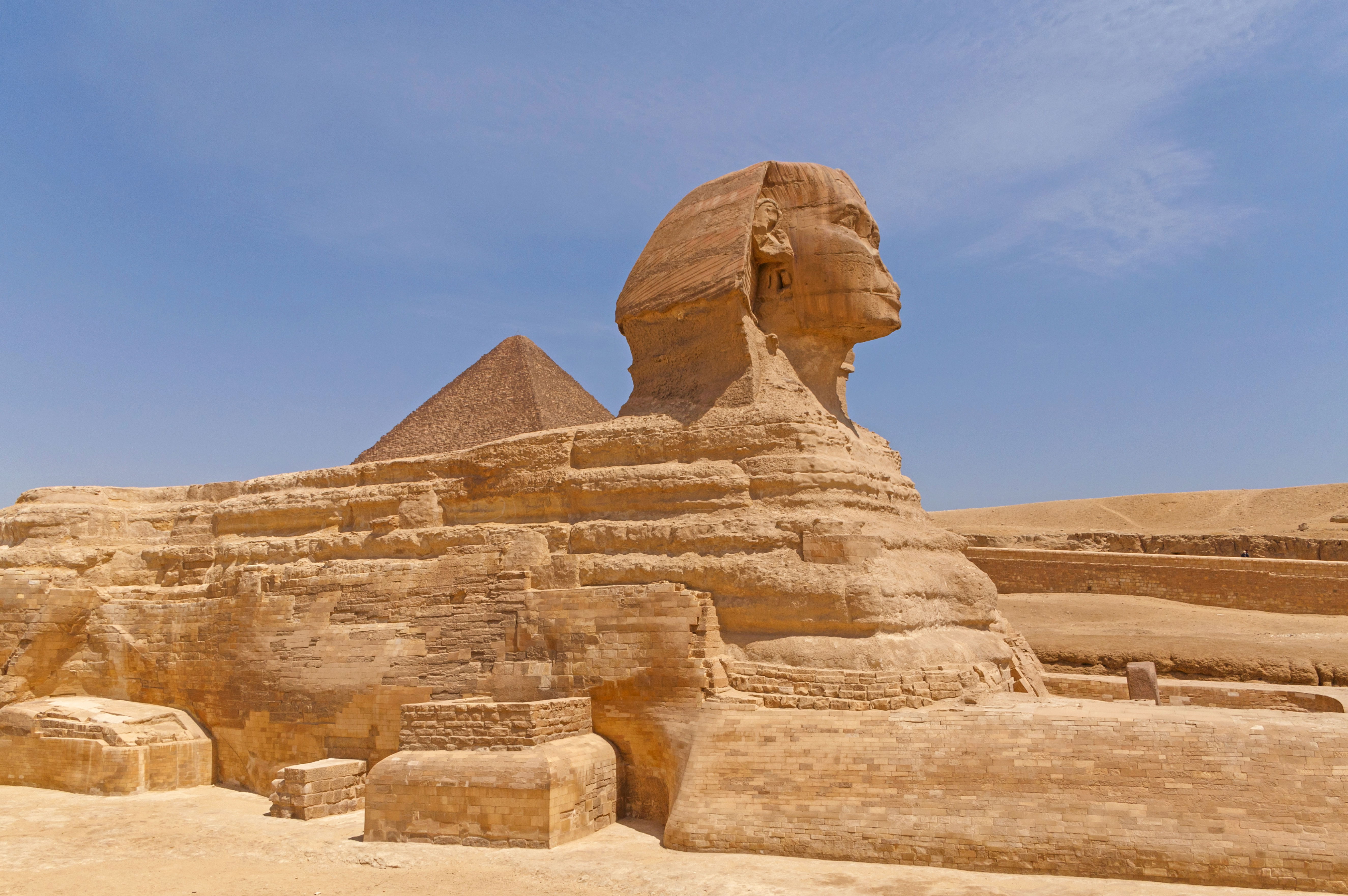
If all the stone used in the pyramid were laid end to end in a wall just ten feet high and three feet thick, it would stretch from Cairo to Rome. And then there is the alignment — almost perfectly true north, its geometry echoing the stars above. Part tomb, part celestial map, the pyramid was designed to guide a divine soul across the heavens. Did You Know…The Great Sphinx of Giza was never meant to stand alone.
A Touch of Ancient Physics
Recent discoveries remind us that Egypt once spoke in many guardians, not one. At Saqqara, near the Step Pyramid of Djoser, archaeologists uncovered a sphinx statue that reveals how the form continued long after the Old Kingdom. In Luxor, the ancient Avenue of Sphinxes — stretching between Karnak and Luxor Temples — revealed more than a thousand sphinx statues, many with ram heads, lining a sacred processional route. Even around the Giza Plateau itself, fragments and remains suggest that the Great Sphinx was part of a broader ceremonial landscape — not a solitary sentinel, but one voice in a powerful symbolic language. Human-headed, ram-headed, falcon-headed — sphinxes guarded temples, lined sacred roads, and marked places where the human and divine were believed to meet.It seems the ancient Egyptians did not just build monuments. They built guardians.
So how did they move the stones? Modern research offers elegant answers. In 2014, physicists demonstrated that by slightly wetting the sand in front of wooden sledges, workers reduced friction dramatically, allowing massive blocks to glide across the desert with far less effort. Ancient wall reliefs depict this very act — a man pouring water ahead of a moving sledge. Ramps, grooves, leverage, balance. Simple principles. Brilliant execution. Further discoveries revealed an ancient branch of the Nile running close to Giza, making river transport of heavy stone possible. In 2017, the Diary of Merer — the oldest known written account of pyramid construction — confirmed that limestone was shipped from Tura along these waterways under organised supervision. A few buckets of water. The right texture of sand. A deep understanding of physics. No aliens required. Just human ingenuity at its finest.
And Here I Am…Egypt is not something you simply read about. It is alive — still breathing under the same sun that lit Khufu’s dream.
